
Pergament AS builds software for the collecting world. Items come in the way collectors already keep them: a photograph, a barcode, a dealer's receipt or an existing spreadsheet. Our tools identify each item, write the catalogue entry, check what it is worth today and prepare it for sale, with AI agents doing the parts they do best. The collector decides what stays, what goes and at what price.
Kistarium is our own platform for collectors. The same technology works for booksellers, dealers and marketplaces, on their stock and under their name.
One set of tools that reads, grades and values collectables, and four ways to put it to work.
Our platform for collectors of books, stamps, coins, cards, art, music and beverages. A photograph, a scanned barcode, a dealer's receipt or an imported spreadsheet becomes a graded, catalogued and valued entry. Every valuation is kept, so a collection carries its value over time.
On top of the catalogue: a portfolio, public and private sharing, wanted-list matching and a marketplace between private collectors.
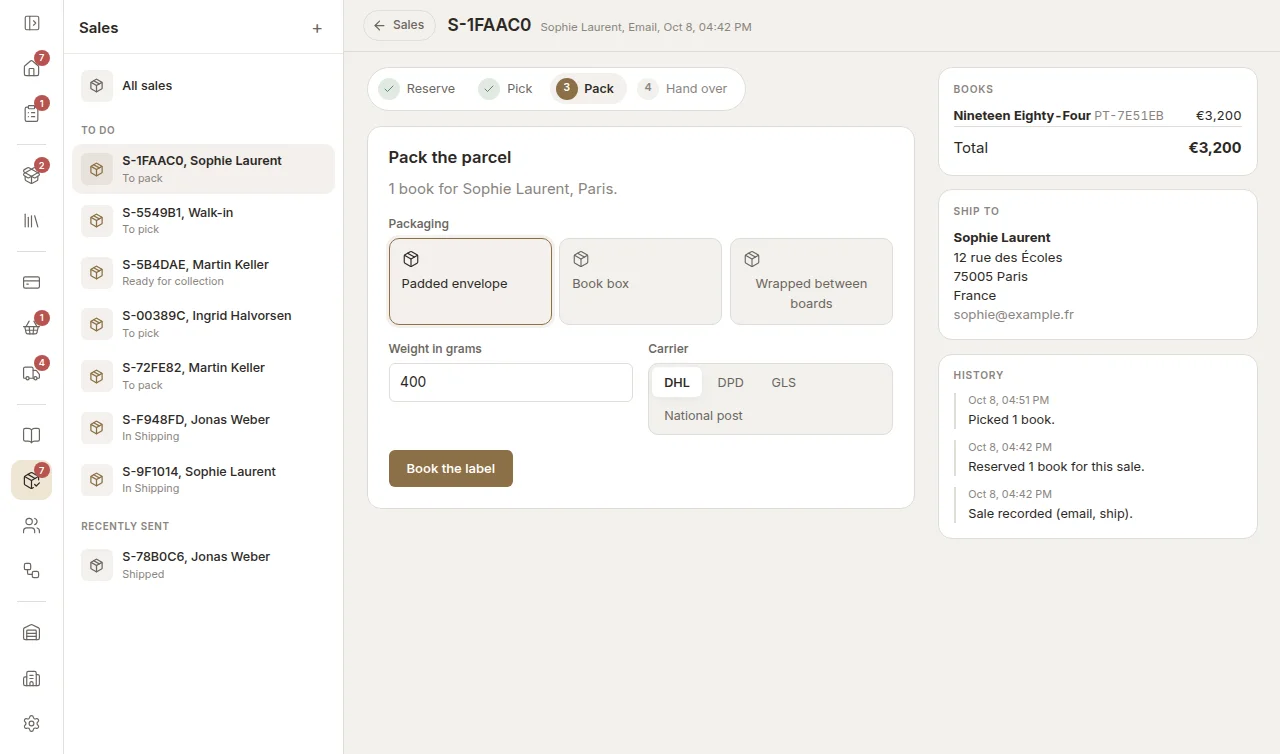
Open KistariumKistarium knows what an item is. The warehouse system knows where it is: on which shelf, on which cart, in which parcel. Lay out the shop floor in 3D, take books in with AI identification and valuation, and run each sale from reservation to parcel.
See the warehouse systemUnlisted stock comes in as a file import, barcodes or photographs and turns into described, priced entries: edition points, condition notes and comparables written the way your customers read them.
Delivered as a feed into your shop system or as a workspace of its own.
Talk to usIdentification, condition reports and estimates from your existing stock list, photographs, barcodes or purchase receipts, built into the way you already sell and running under your own name.
Every engagement starts with a conversation about your stock.
Talk to usKistarium answers what an item is. The warehouse system answers where it is: on which shelf, on which cart, in which parcel. We are building it for antiquarian booksellers and collector shops, and it follows each copy from the moment it comes through the door to the moment it leaves the shop.
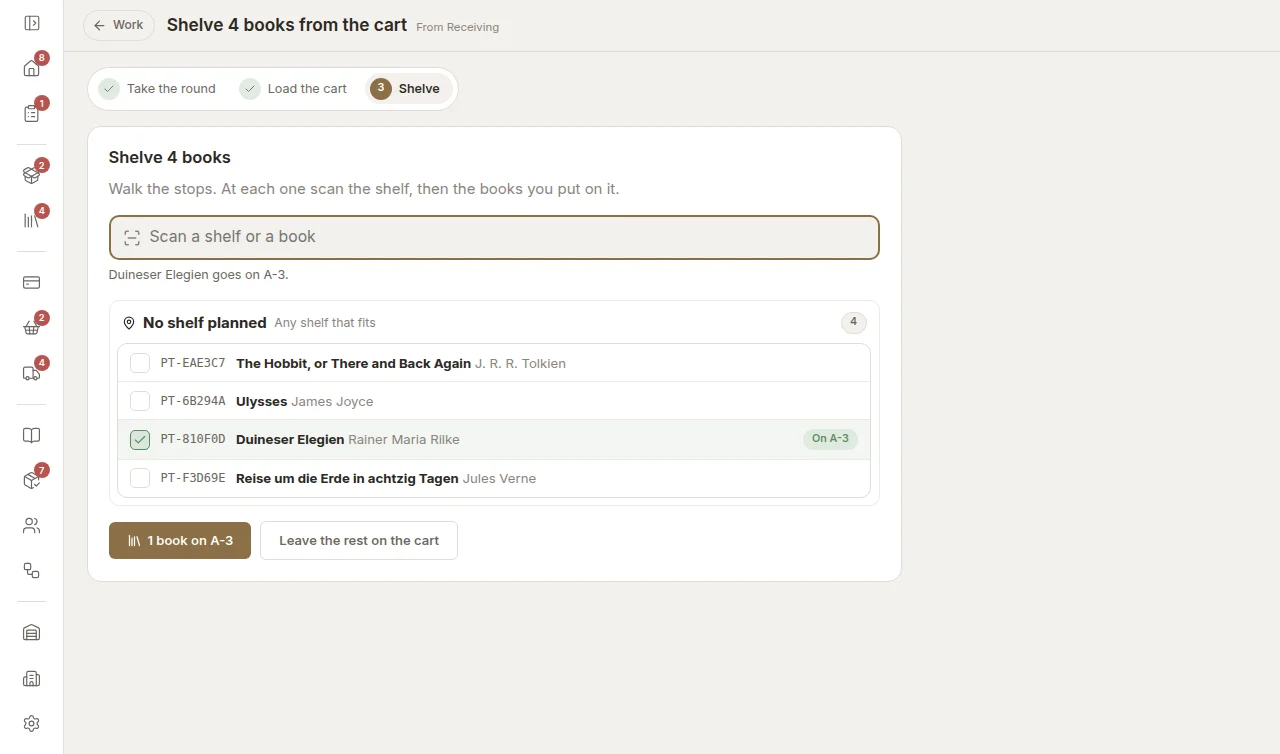
The shop floor is laid out in 3D: rooms, bookcases with their shelf levels, display cases, carts, and the areas for receiving, packing, shipping and collection. Every shelf and every copy carries a printed barcode, so a scan always says where a book is.
A book that comes in is identified from its barcode, its title or a photograph of the shelf, and priced by the same valuation agent that Kistarium uses. Staff take the work from one list: put-away rounds, picking, packing and the parcels for the carrier.
The system is in development. If you run a bookshop or a collector shop and want to try it, talk to us.

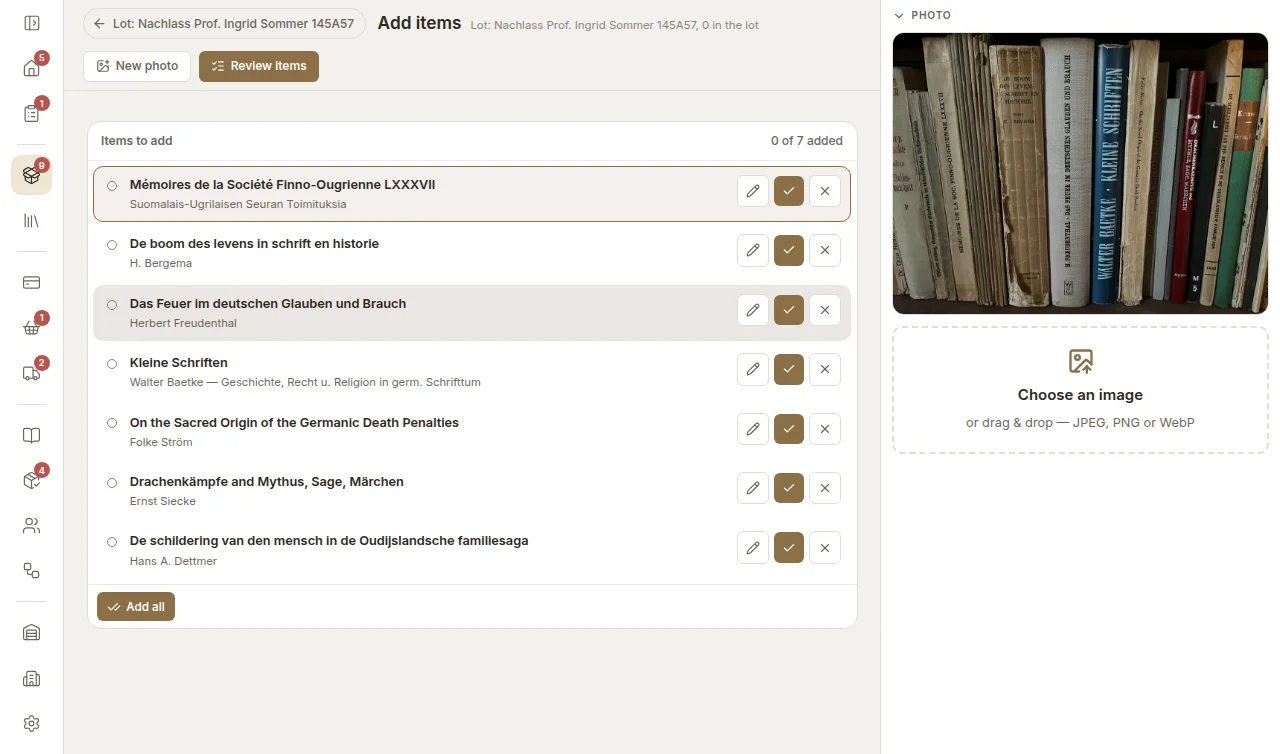
We don't build one general-purpose model. We build software, and where AI helps, we use agents that are each made for a single task. One reads photographs. One resolves barcodes. One turns a dealer's receipt into items. One fills in the fields a cataloguer would fill in. One prices the item against the live market. One digs through completed sales for what it fetched before.
That narrowness is the point. Ask a general assistant about a perforation gauge and it will cheerfully invent one. Our agents work from a schema for the field they serve, carry the tools to check themselves, and hand back the evidence along with the answer.
Each agent runs on its own budget and reports what it spent, so a run reads back line by line. You pay for work that was done, not for a seat.

Jan leads the technical side of the company. He designed and built Kistarium, from the agents and the catalogue to the marketplace, and he answers for how it all runs: architecture, security, infrastructure and the cost of every AI call. He works from Germany.
LinkedInJarle runs the company and its commercial side — partners, pricing, and the collectors, booksellers and traders the work is built for. He works from Mauranger, on the Hardangerfjord.
LinkedInPublished pursuant to the Norwegian E-Commerce Act (ehandelsloven) § 8. Pergament AS, organisasjonsnummer 938 218 188, registered in the Norwegian Register of Business Enterprises (Foretaksregisteret). Responsible editor: Jarle Knutsson Øvrehus (Managing Director), at the address alongside. The e-mail address is our single point of contact for users and for authorities under the EU Digital Services Act (Regulation (EU) 2022/2065, Arts. 11 and 12). Content is prepared with care; we accept no liability for its accuracy beyond what Norwegian law requires, and none for linked third-party sites. Our content is protected under the Norwegian Copyright Act (åndsverkloven).